





















Die süße Revolution im Garten: Kakis, die nicht weich werden müssen (Tiel 2)
Die süße Revolution im Garten: Kaki, die nicht weich werden muss
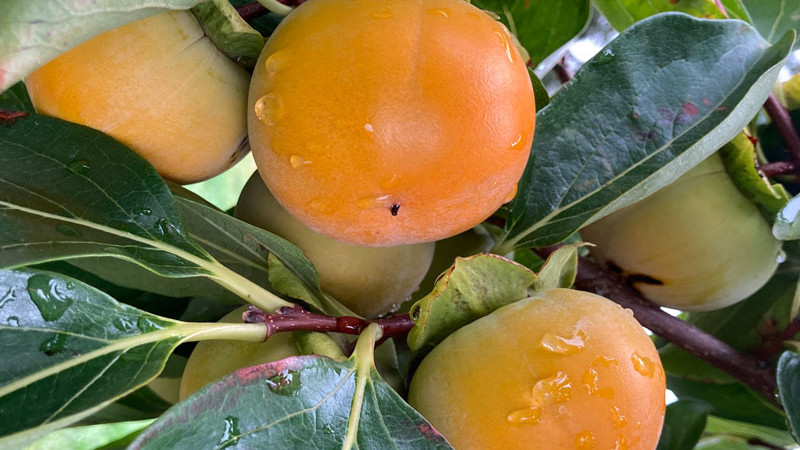
Die Welt der Kaki teilt sich in zwei Lager. Auf der einen Seite stehen die traditionellen Sorten, deren Früchte sich von einem herben Aschenputtel in eine honigsüße Prinzessin verwandeln müssen. Auf der anderen Seite gibt es jedoch die moderne Aristokratie – die Sorten der PCNA-Gruppe, die alle Mythen widerlegen. Ihre Früchte sind direkt vom Baum süß und knackig wie der beste Apfel. Diese Eigenschaft eröffnet völlig neue Möglichkeiten für Gärtner und Feinschmecker.
In diesem Beitrag stellen wir vier Sorten vor, die diese Vielfalt perfekt veranschaulichen. Wir entdecken den chinesischen Sprinter für Ungeduldige, den Geheimtipp aus dem Norden, die weltweite Ikone des süßen Geschmacks und die Königin mit dem Honigherz, die Zeit benötigt.
Der entscheidende Unterschied: PCNA vs. PCA
- PCNA (Pollination Constant Non-Astringent): Diese Sorten haben keinen herben Geschmack, auch nicht im festen, knackigen Zustand. Man kann sie wie einen Apfel direkt nach dem Pflücken essen.
- PCA (Pollination Constant Astringent): Diese Sorten sind im festen Zustand aufgrund des hohen Tanningehalts herb. Ihren köstlichen, honigsüßen Geschmack erhalten sie erst, nachdem sie vollständig weich geworden sind.
Leitfaden zu 4 außergewöhnlichen Kaki-Sorten
1. Cangzhou – Der chinesische Sprinter für Ungeduldige
Cangzhou ist eine wahre Revolution für Gärtner in kühleren Lagen. Ihr größter Vorteil ist die extreme Frühreife – sie reift einen ganzen Monat früher als klassische Sorten. Da sie zur exklusiven Gruppe der PCNA-Sorten gehört, bietet sie ein süßes Erlebnis ohne Wartezeit.
- Herkunft: China
- Wuchs: Mittelstark, erreicht in zehn Jahren eine Höhe von 4–5 m.
- Blüte und Bestäubung: Blüht im Juni, ist selbstfruchtbar.
- Frucht und Geschmack: Große Früchte (180–200 g), orange-rot. Das Fruchtfleisch ist süß und sehr schmackhaft, ohne jede Herbheit, auch im festen Zustand.
- Reifezeit: Ende September.
- Widerstandsfähigkeit: Winterhart bis -20 °C, krankheitsresistent.
2. Chinebuli – Der Geheimtipp aus dem Norden mit der Robustheit eines Hybriden
Chinebuli ist ein Unikat, das die Grenzen zwischen japanischer Kaki und widerstandsfähigen Hybriden verwischt. Obwohl sie zu den reinrassigen Diospyros kaki vom Typ PCNA gehört, überrascht sie mit einer außergewöhnlichen Frosthärte.
- Herkunft: Wahrscheinlich Nordchina.
- Wuchs: Mittelstark und kompakt (3–3,5 m in zehn Jahren).
- Blüte und Bestäubung: Blüht im Juni, ist parthenokarp (bildet samenlose Früchte).
- Frucht und Geschmack: Mittelgroße Früchte (60–120 g), gelb-orange. Das Fruchtfleisch ist süß und sehr schmackhaft, im festen Zustand essbar.
- Reifezeit: Nach und nach ab Anfang Oktober.
- Widerstandsfähigkeit: Ihr größter Trumpf ist die Winterhärte bis zu -24 °C.
3. Fuyu – Die weltweite Ikone des süßen Geschmacks
Fuyu ist das Synonym für moderne, süße und knackige Kaki. Sie ist die weltweit am weitesten verbreitete und beliebteste PCNA-Sorte und stellt den Goldstandard für alle dar, die Kaki wie einen köstlichen Apfel genießen möchten.
- Herkunft: Japan.
- Wuchs: Erreicht im Erwachsenenalter eine Höhe von 4–5 m.
- Blüte und Bestäubung: Blüht im Juni, ist parthenokarp.
- Frucht und Geschmack: Große Früchte (240–320 g), dunkelorange. Das Fruchtfleisch ist hellorange, süß und fest.
- Reifezeit: Ende Oktober.
- Widerstandsfähigkeit: Winterhart bis -20 °C, geeignet für alle Weinanbaugebiete.
4. Hachiya – Die Königin mit dem Honigherz, die Zeit braucht
Hachiya ist die Verkörperung der traditionellen Kaki. Es ist eine Sorte vom Typ PCA, deren große, herzförmige Früchte ein Symbol für Geduld und Verwandlung sind. Direkt vom Baum sind sie herb, aber nach dem Nachreifen in der Wärme verwandelt sich ihr Fruchtfleisch in eine unglaublich süße, weiche und honigartige Masse, die mit dem Löffel gegessen wird.
- Herkunft: Japan.
- Wuchs: Erreicht im Erwachsenenalter eine Höhe von 4–5 m.
- Blüte und Bestäubung: Blüht im Juni, ist parthenokarp.
- Frucht und Geschmack: Große Früchte (200–260 g) mit ikonischer Herzform. Das Fruchtfleisch ist nach dem Weichwerden extrem süß und faserlos.
- Reifezeit: Ende Oktober, Genussreife erst nach dem Nachreifen und vollständigen Weichwerden (ca. 2 Wochen).
- Widerstandsfähigkeit: Winterhart bis -20 °C.
Fazit: Welche Sorte ist die richtige für Sie?
Diese vier Sorten zeigen zwei unterschiedliche, aber gleichermaßen faszinierende Welten der japanischen Kaki. Auf der einen Seite stehen die modernen PCNA-Sorten, die sofortigen süßen Genuss bieten, auf der anderen Seite die traditionelle PCA-Sorte, die ein Fest der Geduld und des tiefen, honigartigen Geschmacks ist.
- Cangzhou: Für eine schnelle und zuverlässige Ernte auch in kühleren Lagen.
- Chinebuli: Eine einzigartige Kombination aus süßem Geschmack und hoher Frostbeständigkeit.
- Fuyu: Eine sichere Wahl – der Weltklassiker, der nie enttäuscht.
- Hachiya: Ein Erlebnis für Feinschmecker, die den traditionellen, marmeladenartigen Geschmack der Kaki lieben.
Ob Sie knackige Frische oder samtige Süße bevorzugen, in dieser Auswahl finden Sie eine Sorte, die Ihre Vorstellungen von der perfekten Götterfrucht perfekt erfüllt.
Haben Sie einen Favoriten unter den Kaki-Sorten? Oder eine Frage zum Anbau? Teilen Sie es uns in den Kommentaren mit!
Verwandte Produkte


