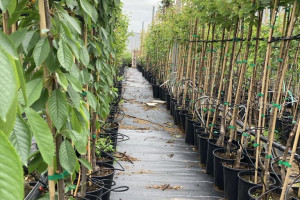
Resistant table grapes (often referred to as interspecific varieties or PIWI) represent a group of interspecific hybrids of the genus Vitis. Botanically, they combine the quality of European grapes (V. vinifera) with the resistance genes of American and Asian species (V. labrusca, V. amurensis). They are characterized by increased tolerance to fungal pathogens (powdery mildew, downy mildew) and frost. The fruit is a berry with varying pulp consistency and skin thickness. Nutritionally, the fruits are a rich source of quick energy (glucose, fructose), potassium, and vitamins B and K. The phytochemical profile is defined by a high content of stilbenes, especially resveratrol (concentrated in the skin), which the plant produces as a defense against infections and which has strong anti-aging effects. Dark varieties are rich in anthocyanins (antioxidants), while the seeds contain proanthocyanidins (tannins) with beneficial effects on the vascular system.