



















Sour Cherry (Prunus cerasus) MOLODYOZHNAYA
- The shipping price depends on the weight of the ordered goods (the more products, the cheaper the price)
- after you have placed the plants in the shopping cart, enter “calculate provisional shipping price” in the shopping cart, after entering the data the eshop will calculate the provisional shipping price for you.
Ask a Question About This Product
| Specifications | |
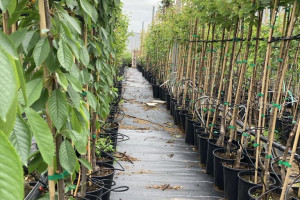
| Height at sale | 160cm |
| Pot | 5l |
| Rootstock | Prunus mahaleb |
| Sell as | 2 year old |
| Ripening time | July |
| Estimated date of sale | May/June |
We send goods on Monday, Tuesday, Wednesday, by agreement also Thursday or Friday.
- Stock: Preparing
- Model: Prunus cerasus


Sour Cherry (Prunus cerasus) 'Molodyozhnaya'
A self-fertile and high-yielding Russian sour cherry variety with a low, shrub-like growth.
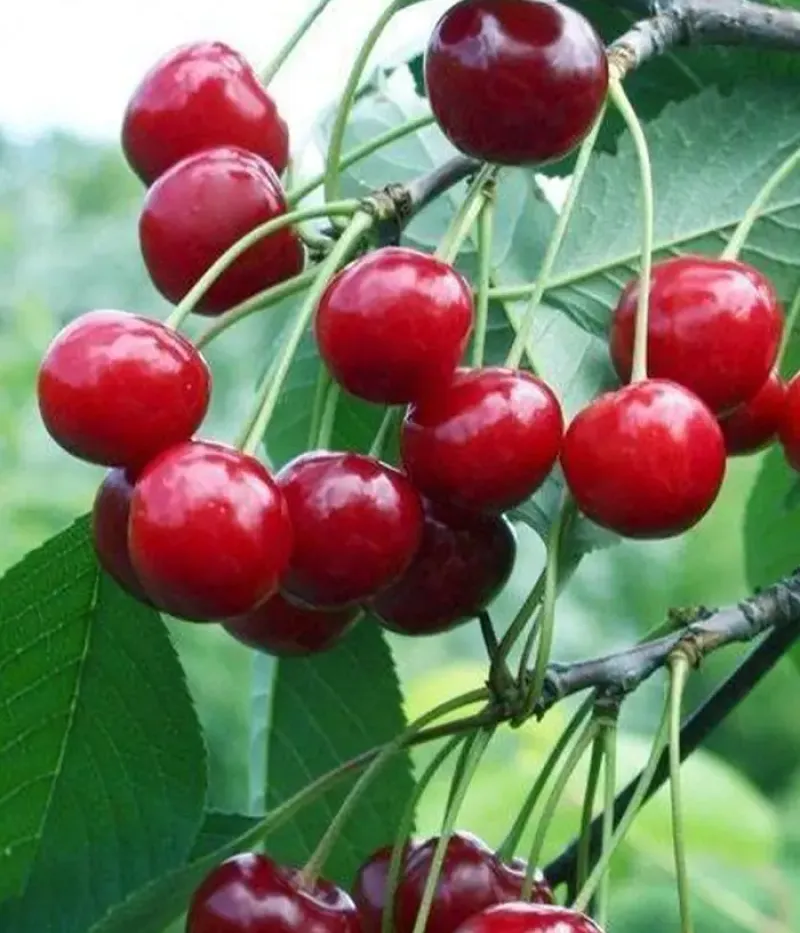
'Molodyozhnaya' (Молодежная) is a proven Russian sour cherry variety, resulting from a cross between 'Lyubskaya' and 'Vladimirskaya'. It is characterized by its low, shrub-like growth (up to 2.5 m), which significantly facilitates harvesting. Its main advantages include self-fertility, high and regular yield, and high frost resistance. The fruits are large, dark burgundy, and thanks to their good transportability and storability, they are suitable not only for gardens but also for commercial cultivation.
Main advantages of the variety:
- Self-fertility and high, regular yield (10–12 kg per bush).
- Low, shrub-like growth that facilitates harvesting.
- High frost resistance (down to -30 °C).
- Good transportability and storability of fruits (up to 20 days).
- Fruits do not drop and have a dry scar.
Origin and Registration
- Country of origin: Russia
- Breeders: Kh. D. Enikeev, S. N. Satarova
- Institution: All-Russian Horticultural Institute for Breeding and Agrotechnology (VSTISP)
- Crossing: ‘Lyubskaya’ × ‘Vladimirskaya’
- Registration: Included in the State Register of the Russian Federation in 1993.
Variety Characteristics
Tree/Bush
- Growth: Less vigorous, has a shrub-like character, grows to a height of 2.0 – 2.5 m.
- Crown: Spreading, drooping, medium density.
- Pollination: It is self-fertile.
Fruit
- Size and weight: Above average, with a weight of 4.5 g.
- Shape and colour: Broadly round, dark burgundy.
- Flesh and juice: The flesh is dark red, juicy, and relatively firm. The juice is dark red.
- Flavour: Sweet-tart (rating 4.3/5).
- Stone: Medium-sized, easily separable from the flesh.
- Use: Versatile (fresh consumption, compotes, jams, juices).
Resistance and Requirements
- Frost resistance: High (withstands frosts down to -30 °C).
- Disease resistance: Medium resistance to shot hole disease and moniliosis.
- Drought resistance: Lower, requires regular watering.
- Requirements: Prefers fertile, loose soils and a location protected from wind.
Cultivation Recommendations
- To achieve maximum yield and fruit quality, regular watering and sufficient nutrients are important.
- Due to its medium resistance to fungal diseases, preventive protection is advisable.
- Although it is self-fertile, the presence of a pollinator can increase the yield.
Harvest and Storage
- Harvest time: Mid-late (second half of July).
- Harvest characteristics: Fruits have a dry scar and do not drop when ripe.
- Yield: High and regular, 10–12 kg per bush.
- Entry into bearing: 3rd to 4th year after planting.
- Transport and storage: Fruits tolerate transport well and can be stored for up to 20 days.


