


Cart

Kiwi (Actinidia kolomikta ) VITAKOLA
Kiwi (Actinidia kolomikta ) VITAKOLA - Tutifruti SK
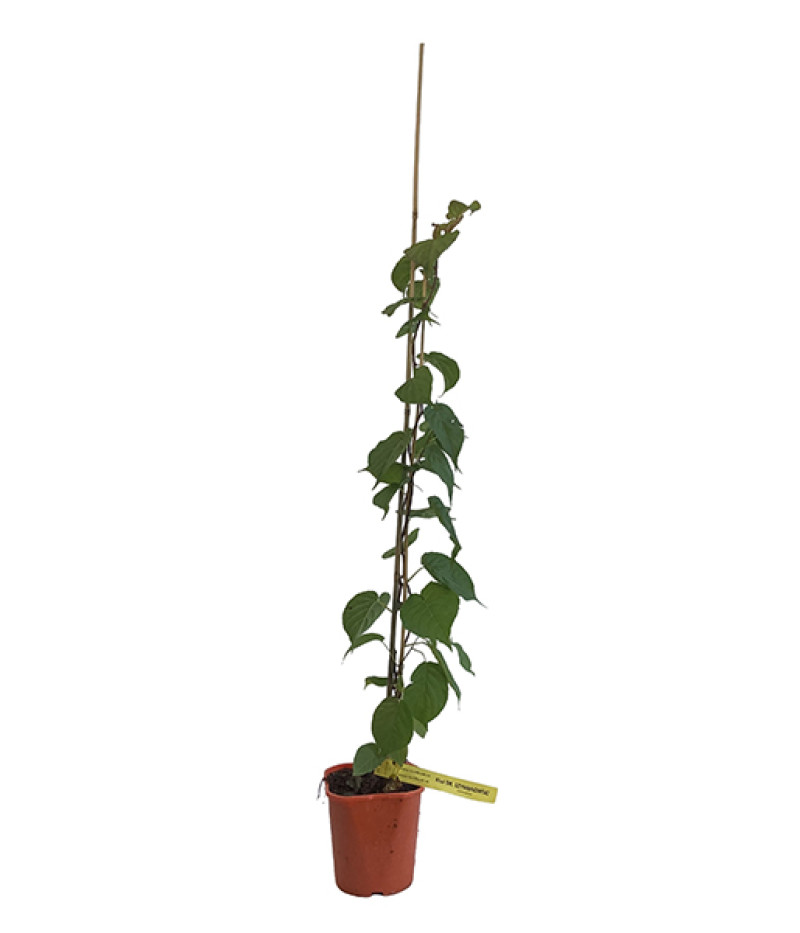
Kiwi (Actinidia kolomikta ) VITAKOLA
Specifications
Height at sale100cm
PotC2
Sell as2 year old
Ripening timeAugust/September
The standard delivery time for Austria is 2-5 working days.
We send goods on Monday, Tuesday, Wednesday, by agreement also Thursday or Friday.
Price
19,90€
  • Stock: In Stock
  • Model: Actinidia kolomikta
Kiwifruit is not only the domain of growers in warm regions. The Kiwi variety Actinidia kolomikta Vitakola is a representative of a species that may be suitable for growers interested in harvesting kiwifruit even from less warm regions. It is a popular hardy kiwifruit variety that is suitable for growing in mild to cooler climates. Actinidia kolomikta is a species of kiwifruit native to eastern Asia, particularly in Siberia, Manchuria and Japan. The variety Vitakola was bred in the Czech Republic (Jan Kola, 2015) for its specific characteristics, including high yield and adaptation to cool climatic conditions.


Characteristics and resistance of Actinidia Kolomikta Vitakola
Kiwifruit is a climbing liana that can grow up to 3-4 metres tall within the cultivar Vitakola. It is recommended to plant the plants at least 4 metres apart for possible luxuriant growth. The annual increment exceeds 1 metre. Kiwi is a dioecious plant, which means that for fruit production you need a male and a female plant for pollination. Thus, it is advisable to grow both a male and a female plant for pollination. For multiple female plants, a single female of the 'colomict' species is sufficient. Although it does not flower heavily, it plays an important role in pollination. Because of its trailing shoots, kiwifruit should be 'planted' against a support, against tensioned wires between structures, directly against metal structures, pergolas or fences. However, in such a situation it will not interfere if the fence is surrounded by a main shoot with gradual wooding, or by several shoots at the same time. Because of the possible early spring hatching of flowers, which may be sensitive to spring frosts, it is a good idea to fuse the plant with non-woven geotextile fabric. For such cases, it is an advantage if the plant does not stand in a lee. The soil may be slightly acidic as its original home is near coniferous forests. 
This variety is hardy, which is one of its advantages. The strong roots in the wood can withstand temperatures as low as -25 °C, making it suitable for growing in areas with severe winter months during which severe frosts would weaken or destroy other kiwifruit varieties altogether. Young, fragile, small and newly planted plants may be damaged by frost and do not yet have this resistance. The leaves of Actinidia kolomikta, including Vitakola, are attractive not only for the fruit but also for the colouring of their leaves, which turn light to pink when green. Pruning of the plant is carried out before the leaves emerge. Excessively long shoots can be cut down to a quarter. We remove the shoots that were produced last year, provided that we are left with younger shoots, which we keep. The protruding shoots are fixed on a support. Pruning is more important for female plants than for male plants. Cutting the plant during the summer is only recommended on plants that grow too vigorously. On shoots that are not strategically important for our shaping plans, it is possible to make a cut behind the last fruit, or a cut on a fruitless shoot behind at least the fifth leaf, so that the shoot does not die. A leaf pruning can resemble a pruning on the vine. 
Fruits
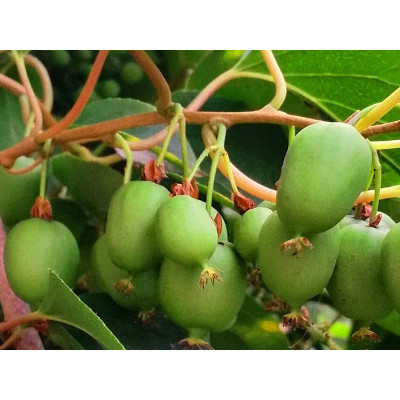
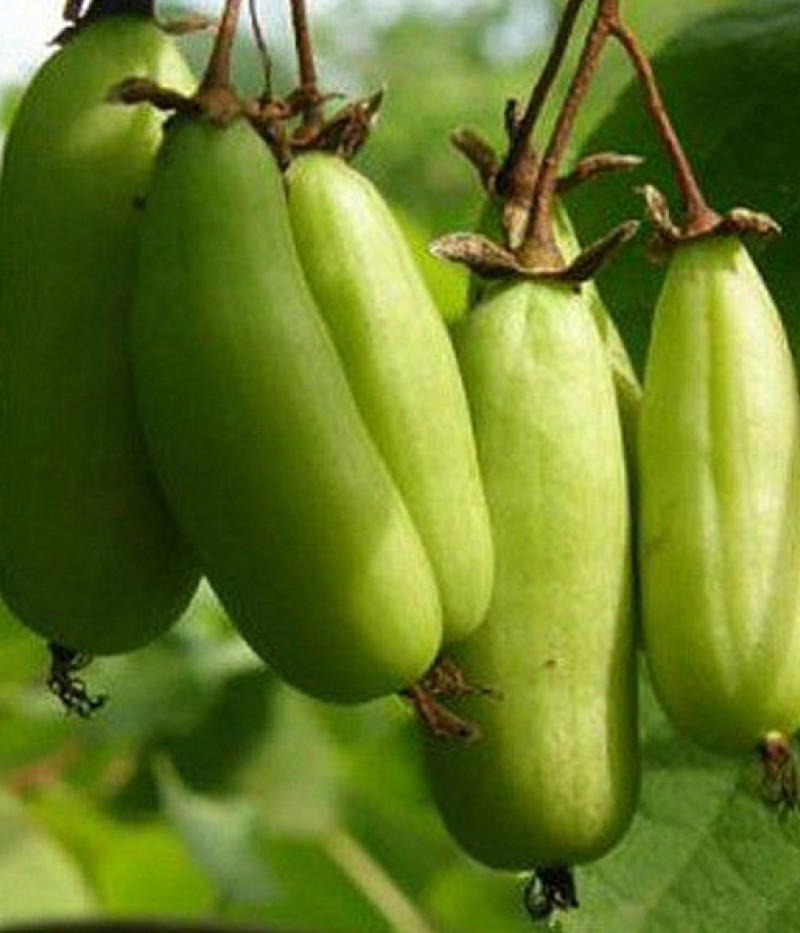
Contrary to the common perception of fruit size in Actinidia kolomikta, the Vitakola cultivar produces larger fruits, approximately 4 cm to 5 cm in size. They are oblong, cylindrical in shape and bright green with a glossy, hairless surface. Several fruits normally grow in close proximity to each other, and their shape may vary in thickness, length or other curves. The flavour of the fruit is mild, sweet and juicy, with a typical kiwifruit aroma and taste. They are well suited for direct consumption. The fruit can be expected to ripen during August to September, but the harvest can only be obtained in about the third to fourth year after planting in the garden. 
Importance for the grower
Vitacola is easy to care for. It adapts well to different soil types but takes time to come into fruiting. In addition to permeable, nutritious soil, give the plant a sunny or semi-shaded position, ideally with a predominance of hours of sunshine. The fruits are suitable for direct consumption, but also for processing - you can make jams, compotes or dry them. Thanks to their high vitamin C content, kiwifruit are generally a valuable addition to the diet and a source of vitamins, especially in the winter months. 

Write a review

Note: HTML is not translated!
Rating
Bad Good
Mini kiwi Ananasnaya is one of the most popular kiwifruit varieties in North America but its origins are found in Russia.. It is a prolific decorative..
Price
18,90€
Add to Cart
The ISSAI mini kiwifruit is one of the most popular kiwifruit varieties. It is a prolific decorative climber. It grows vigorously and is cold resistan..
Price
16,50€
Add to Cart
Mini kiwi GENEVA is one of the early and very popular mini kiwi varieties. It is a prolific decorative liana. It grows vigorously and is cold and drou..
Price
17,90€
Add to Cart
Mini kiwi Purpurova Sadova is one of the most popular kiwi varieties from Ukraine. It is a prolific decorative climber. It grows vigorously, is cold-r..
Price
18,90€
Add to Cart
Actinidia arguta 'Chang Bai Giant' is a kiwi variety originating from China and is known for its large, sweet fruits. This kiwi species is frost-resis..
Price
18,90€
Add to Cart
Actinidia arguta 'Domino' is a kiwi variety originating from Asia. This kiwi species has large fruits with a smooth green-brown skin. It is suitable f..
Price
17,90€
Add to Cart