



















Apricots Dimaija and Velta: Nordic Life Elixirs Analyzed
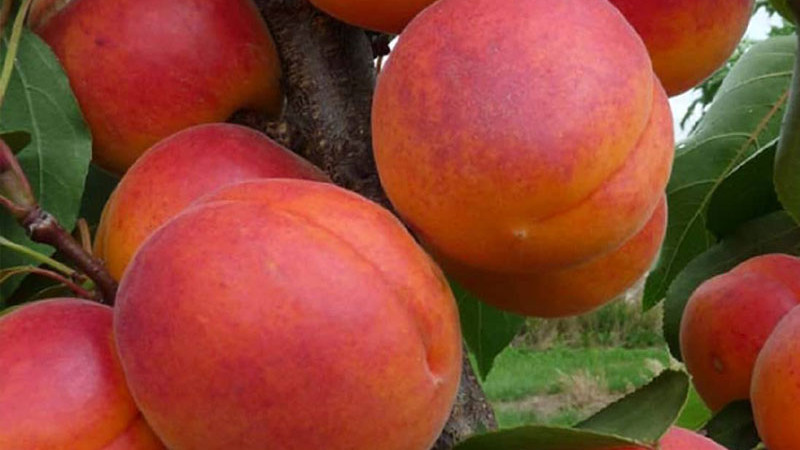
Nordic Life Elixirs: Why 'Dimaija' and 'Velta' Apricots Biochemically Outclass Common Varieties
Most consumers fall for a simple illusion when choosing fruit: the bigger and sweeter the apricot, the better it must be. However, modern nutritional science ruthlessly deconstructs this myth. Sweetness is often just empty calories, while the true value of fruit—its ability to protect our cells from aging, cancer, and inflammation—is hidden in bitter, sour, and astringent phytochemicals.
When Latvian scientists subjected apricots grown in harsh northern conditions to detailed biochemical analysis, the results were shocking. They found that while some varieties (such as the extremely sweet 'Boriss' or common Greek apricots from the supermarket) are merely a tasty dessert, two specific varieties – 'Dimaija' and 'Velta' – represent a literal pharmacological miracle. This article takes you deep into the cells of these two Nordic gems.
“The Northern Paradox confirms that harsher weather conditions stimulate a much more intense synthesis of protective compounds in trees. 'Dimaija' and 'Velta' are living proof that what doesn't kill the tree makes it nutritionally stronger.”
The Northern Paradox: Why Stress Breeds Superfoods
To understand the uniqueness of the 'Dimaija' and 'Velta' varieties, we must understand the environment they come from. They were bred at the Institute of Horticulture (LatHort) in Latvia, a country characterized by cold winters and humid summers. Plants produce secondary metabolites (polyphenols, flavonoids, vitamins) primarily as a defense mechanism against abiotic stress—cold, drought, or pathogens.
A comprehensive study (Juhnevica-Radenkova et al., 2024) confirmed the hypothesis: the harsher weather conditions in the North contribute to a much more intensive synthesis of protective substances compared to apricots grown in a mild southern climate.
'Dimaija': The Absolute Ruler of Antioxidants and Vitamin C
If there were an Olympics for health-promoting substances, the 'Dimaija' variety would take gold in almost all categories. Compared to the extremely sweet 'Boriss' or common commercial apricots from Greece, its values are literally from another world.
Total Phenolic (TPC) and Flavonoid (TFC) Content
'Dimaija' reached an incredible total phenol content of 2795.3 mg GAE/100 g DW (dry weight). For comparison: the 'Gundega' variety had 1843.2 mg, Greek apricots only 582.0 mg, and the sweet 'Boriss' a measly 216.4 mg. 'Dimaija' thus has more than 12 times more antioxidants than 'Boriss' and nearly 5 times more than standard supermarket apricots!
Specific Healing Molecules (LC-MS Analysis):
- Rutin (Vessel Protector): 'Dimaija' contains 1249.4 µg/g DW of rutin. This flavonoid is key for vascular wall strength. Competitive 'Boriss' has only 89.5 µg/g.
- Neochlorogenic Acid (Anti-inflammatory Warrior): With a value of 550.2 µg/g DW, 'Dimaija' absolutely outclasses 'Gundega' (84.9 µg/g) and 'Boriss' (1.0 µg/g).
- Catechin (Cell Protection): 'Dimaija' provides 373.3 µg/g DW of catechin, while supermarket apricots show only 6.0 µg/g.
Antioxidant Shield: Thanks to this arsenal, extracts from 'Dimaija' showed the highest total antioxidant activity in both DPPH (5149.2 mM TE) and FRAP (638.2 mM TE) tests.
'Velta': The Queen of Carotenoids and Chlorogenic Acid
While 'Dimaija' rules in total phenols, the 'Velta' variety (registered in 1999) holds the top spot in two extremely important categories that make it an ophthalmological and metabolic marvel.
Ophthalmological and Metabolic Powerhouse
Carotenoids (Vision & Immunity): 'Velta' achieved the highest carotenoid content among fresh Latvian varieties: 24.4 mg/100 g DW. This makes it the best choice for supporting eye health.
Chlorogenic Acid (Metabolic Engine): This is 'Velta's' greatest triumph. It contains a shocking 1129.1 µg/g DW of this valuable substance, known from green coffee, which slows sugar absorption and aids weight loss. 'Dimaija' has 384.8 µg/g, while 'Boriss' has a negligible 21.3 µg/g.
The Price of Health: Why Superfoods Don't Taste Like Candy
Looking at this stunning biochemical data, the question arises: Why aren't these varieties grown everywhere instead of 'Boriss' or Greek apricots? The answer lies in sensory perception. The phytochemicals that heal us (especially phenolic acids and catechins) are inherently bitter and astringent.
- Dimaija has the lowest sugar content (only 11.3 Brix%) and high acidity.
- Velta has the highest titratable acidity of all (35.9%) and the lowest maturity index.
Truth on the Tongue
In taste tests, these varieties scored lower than the sweet 'Boriss'. Tasters described a "tart taste with a spicy aftertaste" ('Velta') and a "bitter aftertaste" ('Dimaija'). However, science is clear: this bitterness is not a flaw, but proof of the presence of medicine. 'Boriss' pleases the palate, but 'Dimaija' protects your cells.
Comparison Table: Dessert vs. Natural Pharmacy
| Trait | Dimaija | Velta | Common / Sweet Varieties |
|---|---|---|---|
| Antioxidants (TPC) | Record Breaking (2795 mg) | High (1026 mg) | Low (216 - 582 mg) |
| Chlorogenic Acid | Medium (384 µg/g) | Extreme (1129 µg/g) | Minimal (21 µg/g) |
| Taste Profile | Medicinal / Astringent | Tart / Spicy | Very Sweet / Dessert |
| Benefit | Immunity & Vessels | Metabolism & Vision | Enjoyment & Calories |
Conclusion: The Choice Between Dessert and Cure
The comparison of Latvian varieties gives us an important lesson on how we should perceive fruit. If you are looking only for a sweet, uncomplicated dessert, reach for the 'Boriss' variety or standard supermarket produce.
However, if you view your garden as a natural pharmacy, the 'Dimaija' and 'Velta' varieties represent the absolute pinnacle of what nature, in conjunction with the art of breeding, can create. They prove that the true value of an apricot is not measured on a sweetness scale, but in its ability to protect our lives at the cellular level. They are true Nordic elixirs of life.
Plant real health in your garden
Explore our offer of Latvian super-apricots ➤
Interested in functional foods?
Follow us on Facebook for exclusive insights into the world of fruit biochemistry.
Follow us on Facebook ➤