





















Peach Thinning: Why and How to Remove Young Fruits
The Art of Thinning: Why We Must Remove Peach Fruits to Get a Better Harvest
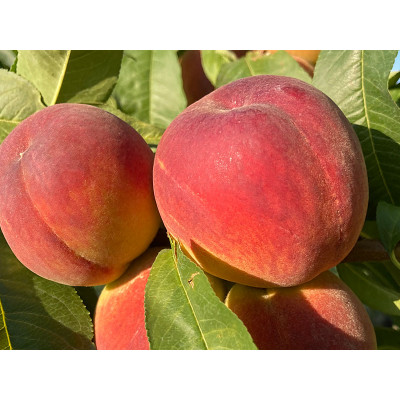
Imagine a peach orchard in full bloom. Thousands of pink flowers promise a bountiful harvest, and to the layperson, it is a sight of perfect abundance. For the experienced fruit grower, however, it is a signal for alarm. If every flower developed into a fruit and the tree kept them all, the result would not be a record harvest, but a disaster. Branches would break under the weight, and the fruits would remain small, sour, and unmarketable.
In peach (Prunus persica) cultivation, a paradoxical rule applies: if you want to gain more quality and profit, you must ruthlessly take away a large part of the tree's crop. Welcome to the world of "crop load management" – the art of thinning.
“Every fruit is a 'consumer' that drains water and sugars from the tree. If there are too many fruits, the tree cannot nourish them to the desired size. Fewer fruits in this case mean greater success.”
Why is thinning an absolute necessity?
Peaches tend to overproduce massively. If the number of fruits is not regulated, the consequences are fatal for both the harvest and the tree itself:
- Physical Damage: The extreme weight of hundreds of small fruits leads to branch breakage and permanent damage to the canopy.
- Low Market Value: Fruits will remain small and have a low sugar content, which drastically reduces their saleability.
- Tree Exhaustion: The tree invests all its energy into the fruits at the expense of forming flower buds for the following year, leading to alternate bearing (one year with a crop, the next without).
Thinning Methods: From Manual Labor to Chemistry
1. Manual Thinning
This is the safest and most accurate method. It is usually performed 40 to 60 days after full bloom.
The Golden Rule of Thinning
You should leave one fruit every 15 to 20 cm on the branch. Alternatively, it is recommended to ensure that there are at least 40 to 60 healthy leaves to nourish each remaining fruit.
2. Chemical Thinning
In commercial production, due to the high cost of manual labor (which can account for up to 20% of costs), chemical substances applied during flowering are used. Most commonly, ammonium thiosulfate (ATS) or ethephon are used to cause a portion of the flowers or young fruits to drop.
3. Mechanical Thinning
Special machines (shakers) are used to mechanically disrupt the fruit set. In practice, however, mechanical thinning is often combined with manual "touch-ups" to ensure ideal fruit distribution in the canopy.
Balance Between Quantity and Quality
Impact of Fruit Spacing on Results
| Fruit Spacing | Fruit Weight | Sugar Content (SSC) |
|---|---|---|
| 10 cm | Low | Low |
| 15 cm | Medium | Good |
| 20 - 25 cm | High (Extra Fruits) | Very High |
When to start?
Early thinning of flowers or young fruits (hazelnut size) is key. The sooner you remove the competition, the more energy remains for the remaining fruits to reach their maximum caliber.
Conclusion
The art of thinning proves that in modern fruit growing, the equation "more flowers = more profit" does not hold. Quite the opposite. Only through the uncompromising removal of a large part of the potential crop can we relieve the tree and allow it to focus its energy on creating those perfect, juicy, and sweet peaches. Thinning is not a loss, but the best investment in quality.
Choose varieties with naturally large fruits
Check out our offer of premium peaches ➤
Have questions about thinning or pruning?
Join our community of growers and consult with experienced experts.
Follow us on Facebook ➤