





















The Science of Peaches: Genetics, Diseases, and Taste Anatomy
The Fascinating World of Peaches: From Invisible Genes and the Fight Against Diseases to the Alchemy of Perfect Taste
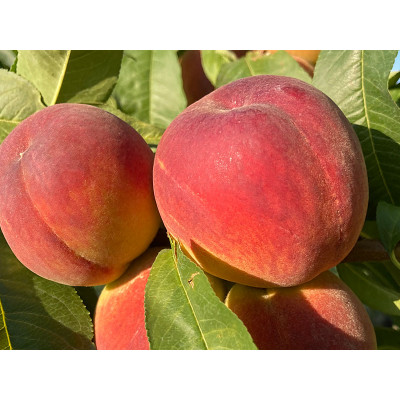
Close your eyes and imagine a peach. Do you see the classic, slightly fuzzy fruit with yellow flesh? Or do you picture a smooth nectarine? Perhaps an unusual, flat "UFO" peach comes to mind. Although these fruits differ diametrically in appearance and taste, botanically they are one and the same species – Prunus persica.
How is it possible that a single fruit species can produce such an astounding array of shapes and textures? And why is this delicious fruit simultaneously so vulnerable to natural threats? This extensive article will take you into nature's laboratory. We will explore how invisible genetic switches create the fruits of our dreams, how wild relatives save orchards from ruin, and what the chemical equation of perfect taste consists of.
“The peach is an absolute treasure for geneticists. It has a small genome, a short generation time, and is often self-fertile. Thanks to this, we understand inheritance in peaches better today than in any other fruit tree.”
Part I: The Secret Code of Beauty – How Genes Shape the Peach
Every fruit we hold in our hand is the result of a precise combination of dominant and recessive genes – biological switches.
The Skin: The Battle Between Fuzz and Smooth Elegance
The most visible difference is the presence or absence of "fuzz" (pubescence). A nectarine is not a cross between a peach and a plum, as is often mistakenly believed; it is simply a smooth mutation of the peach. This dramatic difference is controlled by a single gene (G/g).
- The allele for fuzzy skin (G) is dominant.
- The allele for smooth skin (g) is recessive.
For a tree to produce nectarines, it must inherit the recessive allele from both parents (genotype gg). If it has at least one dominant G allele, the fruits will always be fuzzy.
Shape: The Mystery of the "Flying Saucers"
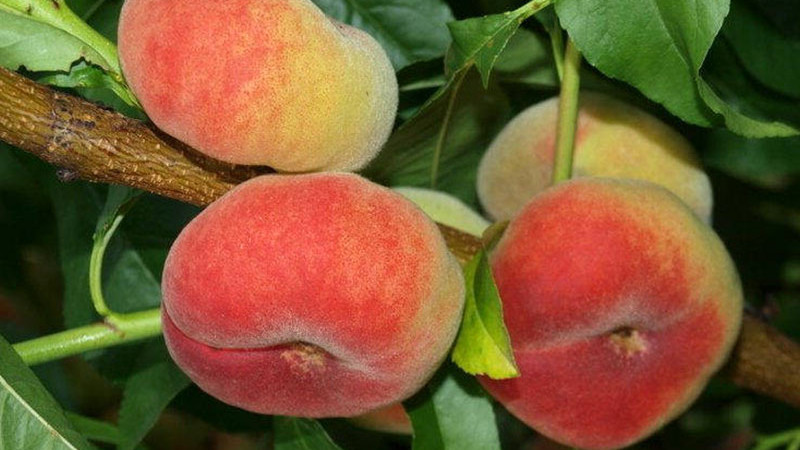
Flat peaches (UFO, Donut, var. platycarpa) are controlled by the dominant S gene. However, this gene harbors a deadly secret. If two dominant alleles meet in a seed (homozygous state SS), this combination is lethal. The seed either won't germinate, or the plant will die. Therefore, all flat peaches are genetic heterozygotes (Ss).
Flesh Color and Texture
The basic white flesh color is dominant over yellow. Even rarer is blood-red flesh, controlled by the recessive bf gene, responsible for producing anthocyanins directly in the flesh.
Texture is controlled by three genes: F/f (freestone vs. clingstone), M/m (melting vs. non-melting, rubbery flesh), and Hd/hd (so-called "stony hard" – fruits do not produce ethylene, so even when ripe, they remain extremely hard and crunchy).
Part II: The Green War in the Orchards – How Genetics Saves the Harvest
The peach is extremely vulnerable. Commercial varieties have often lost the natural resistance of their wild ancestors. From microscopic viruses, through destructive fungi, to soil-dwelling nematodes – legions of enemies constantly attack.
The Vulnerable Queen: A List of Enemies
- Plum Pox Virus (PPV or Sharka): The most devastating viral disease. Causes deformations and dieback. There is no chemical cure; the tree must be uprooted.
- Monilinia and Leaf Curl: Fungi that turn fruits into rotting mummies and leaves into red blisters.
- Nematodes: Microscopic worms destroying roots, the main cause of Peach Tree Short Life (PTSL) syndrome.
Seeking Salvation in the Wilderness
Sources of natural resistance in cultivated peaches are limited. The solution is found in the harsh conditions of Asia among wild relatives (e.g., Prunus davidiana, Prunus mira). These species are crossed with commercial peaches, but it's a long-distance run – wild species have inedible fruits, so "cleaning" the genome takes generations.
Modern Weapons: Marker-Assisted Selection (MAS)
Thanks to the sequencing of the entire peach genome, scientists today use molecular markers. Instead of waiting for a harvest, it is enough to analyze the DNA from a tiny leaf of a seedling. If the plant contains the marker for resistance, it is grown further; if not, it is immediately discarded. This is how, for example, the famous rootstock 'Nemaguard', highly resistant to nematodes, was created.
Part III: The Anatomy of Taste – The Alchemy That Makes a Peach a Peach
The taste of a peach is a complex experience created in our brain by combining three basic pillars: sweetness, acidity, and aroma. Up to 87% of the fruit's weight is water. What gives it character is hidden in the remaining 13 percent.
1. The Sweet Foundation: Sugars
The dominant sugar (56% to 89% of total sugars) is sucrose, which is responsible for the full sensation of sweetness. Fructose is in second place. Interestingly, flat "UFO" peaches tend to accumulate the highest amount of sugars, explaining their popularity.
2. The Refreshing Contrast: Organic Acids
Malic, quinic, and citric acids dominate. The ratio between sugars and acids (SSC/TA) is a key indicator of ripeness. The perceived sweetness of a ripe peach is often caused more by a decrease in acids than by an increase in sugar itself.
3. The Soul of the Fruit: Volatile Aromatic Compounds
What truly defines a peach and distinguishes it from an apple is its aroma. It is made up of more than 100 volatile organic compounds (VOCs).
The War of Scents: Why Does It Smell Different?
| Fruit Type | Key Molecule | Sensory Profile |
|---|---|---|
| Classic Peach | Lactones (gamma-decalactone) | Heavy, sweet "peachy" scent. |
| Nectarine | Terpenes (linalool) | Floral and "green" aroma. |
| Flat Peach (UFO) | Lactones + benzaldehyde | Intense and very fruity aroma. |
Refrigerator Warning: The peach is a climacteric fruit (it respires and ripens after harvest thanks to ethylene). Long-term cold storage (chilling injury) disrupts the aroma formation process. Lactones disappear and alcohols accumulate, leading to a loss of scent and the emergence of undesirable off-flavors.
Conclusion
The peach is a masterpiece of nature. By understanding its "secret code," breeders today can create varieties through crossing with wild relatives that not only resist fatal diseases but, above all, bring consumers a perfect symphonic experience of taste, scent, and beauty. Understanding this "anatomy of taste" is crucial – large and red fruit alone is no longer enough; we want it to smell and taste exactly as we remember from childhood.
Taste the Result of Modern Science
Choose from our offer of unique peach varieties ➤
Interested in Genetics and Plant Breeding?
Join our community and discuss with experts and enthusiasts.
Join the VIP Facebook group HERE ➤