





















Die Hauspflaume: Von der Botanik der Unterarten zur Präzisionsernährung
Die faszinierende Welt der Hauspflaume: Vom genetischen Chamäleon zu den Geheimnissen der Präzisionsernährung
Wenn wir im Pflanzenreich nach einem Meister der Verwandlung suchen müssten, stünde die Hauspflaume (Prunus domestica L.) zweifellos auf dem Siegertreppchen. Diese hexaploide Art, die vor Jahrtausenden wahrscheinlich durch die Kreuzung der diploiden Kirschpflaume (Myrobalane, Prunus cerasifera) und der tetraploiden Schlehe (Prunus spinosa) in der Kaukasusregion entstand, ist ein Paradebeispiel für genetischen Polymorphismus.
Im Laufe der Jahrhunderte natürlicher Evolution und gezielter menschlicher Züchtung hat sie sich in eine unglaubliche Vielzahl von Formen, Gestalten, Farben und Geschmacksrichtungen aufgespalten. Während Agronomen Pflaumen oft nach ihrer wirtschaftlichen Nutzung in Gruppen einteilen, haben Botaniker ein detailliertes System von Unterarten (Subspezies - ssp.) geschaffen, das Ordnung in dieses Obst-Chaos bringt.
Dieser Artikel nimmt Sie mit auf eine tiefe Exkursion – zunächst untersuchen wir den reichen Stammbaum der sieben Hauptunterarten der Pflaume, und anschließend tauchen wir in die Physiologie des Baumes ein, um herauszufinden, wie er uns mithilfe der Blattanalyse genau mitteilen kann, welche Nährstoffe ihm fehlen.
„Interessant ist, dass im Gegensatz zu vielen anderen Obstarten der Alten Welt bei Ausgrabungen im antiken Pompeji keine Samen der Hauspflaume gefunden wurden. Dies deutet darauf hin, dass es sich um eine relativ 'junge' Art handelt, die in Europa 'nur' seit etwa 2000 Jahren angebaut wird.“
Teil I: Ein Stammbaum voller Farben und Geschmäcker (Unterarten der Hauspflaume)
Die moderne botanische Systematik klassifiziert verschiedene Formen von „Pflaumen“ als Unterarten innerhalb einer großen, variablen Art: Prunus domestica. Dieser Ansatz spiegelt am besten ihre gemeinsame genetische Basis und ihre Fähigkeit zur gegenseitigen Kreuzung wider.
1. Prunus domestica ssp. domestica (Echte Zwetschgen)
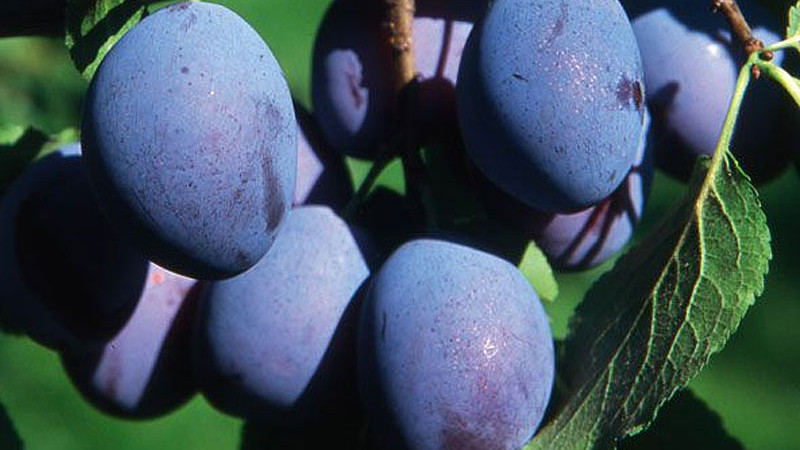
Dies ist die nominelle und wirtschaftlich wichtigste Unterart, die „klassische Zwetschge“ (oft als „Prunes“ bezeichnet). Die Früchte sind mittelgroß bis groß und haben eine länglich-ovale Form. Die Schale ist dunkelblau bis blauschwarz und mit einer dicken Wachsschicht (Bereifung) überzogen. Das Fruchtfleisch ist gelb bis orange. Sie zeichnen sich durch festes Fruchtfleisch, einen hohen Zuckergehalt und einen Stein aus, der sich leicht löst (freestone). Sie sind ideal zum Trocknen, für die Herstellung von Marmeladen und Destillaten.
2. Prunus domestica ssp. insititia (Kriechen-Pflaume / Haferpflaume)
Diese Unterart (im Englischen „bullace“ oder „damson“) stellt einen älteren, primitiveren Zweig dar, der den wilden Vorfahren nähersteht. Die Bäume sind kleiner, oft strauchartig, und können leicht dornig sein. Die Früchte sind kleiner, kugelig, meist dunkelblau. Das Fruchtfleisch haftet oft fest am Stein (clingstone) und der Geschmack ist im Vergleich zu echten Zwetschgen meist herber und saurer. Sie wird spezifisch für die Herstellung von Marmeladen und Gelees (hoher Pektingehalt) und als wertvolle Unterlage verwendet.
3. Prunus domestica ssp. italica (Renekloden / Ringlotten)
Die Aristokratie unter den Pflaumen („Reine Claude“). Die Früchte sind fast perfekt kugelförmig mit einer grünen bis goldgelben Schale. Das Fruchtfleisch ist außergewöhnlich süß, weich, sehr saftig und aromatisch. Sie sind in erster Linie für den Frischverzehr oder für Premium-Kompotte bestimmt. Sie eignen sich nicht zum Trocknen.
4. Prunus domestica ssp. syriaca (Mirabellen)
Oft laienhaft mit der Myrobalane (P. cerasifera) verwechselt, botanisch jedoch eine edle Unterart der Hauspflaume. Die Früchte sind sehr klein (2 – 3 cm), perfekt rund und leuchtend gelb. Das Fruchtfleisch ist fest, extrem süß und hocharomatisch. Sie werden in der französischen Gastronomie hoch geschätzt für Marmeladen, Kuchen und Destillate.
5. Weitere Übergangsformen
- ssp. intermedia (Halbzwetschgen): Übergangsform zwischen echten Zwetschgen und Kriechen-Pflaumen. Mittelgroße, ovale Früchte, der Stein löst sich nur teilweise.
- ssp. pomariorum (Spilling): Nähern sich in der Form den Renekloden, in Farbe und Fruchtfleisch eher den klassischen Pflaumen. Die Schale ist dunkelblau bis rotblau.
- ssp. prisca (Ziparte / Zibarte): Formen ganz am Anfang der Domestizierung. Winzige Früchte, dünnes Fruchtfleisch, oft herb. Heute dienen sie hauptsächlich als genetisches Material für Züchter (Resistenz) und für traditionelle Destillate.
Teil II: Die Sprache der Bäume, verborgen in den Blättern – Warum visuelle Diagnostik nicht ausreicht
Stellen Sie sich vor, Ihr Obstgarten könnte Ihnen genau sagen, was ihm fehlt. Die Pflaume gehört zu den wichtigsten kommerziellen Arten, doch viele Obstgärten leiden unter verborgenem Hunger. Eine unzureichende Verfügbarkeit von Makronährstoffen führt zu begrenztem Wachstum und schlechter Fruchtqualität. Verlassen wir uns nur auf visuelle Symptome, reagieren wir zu spät – der Ernteschaden ist dann bereits irreversibel.
Der traditionelle Ansatz verlässt sich oft auf Bodenanalysen. Der Boden kann jedoch genügend Nährstoffe enthalten, aber der Baum kann sie aus verschiedenen Gründen (pH-Wert, Trockenheit, Element-Antagonismus) nicht aufnehmen. Deshalb nutzt die moderne Agronomie die Blattanalyse, die bei Pflaumen standardmäßig 120 Tage nach der Vollblüte (DAFB) durchgeführt wird.
Der DOP-Index: Mathematik im Dienste der Agronomie
Um festzustellen, ob ein Baum zu wenig oder zu viel Nährstoffe hat, verwenden Wissenschaftler den sogenannten DOP-Index (Deviation from Optimum Percentage). Er vergleicht den tatsächlichen Nährstoffgehalt im Blatt mit dem Idealwert. Die Summe dieser Werte (Σ DOP) zeigt das gesamte Nährstoffungleichgewicht. Untersuchungen haben gezeigt, dass die Nährstoffakkumulation stark von der jeweiligen Sorte abhängt.
Was enthüllte die Blattanalyse bei verschiedenen Sorten?
Eine umfassende Studie (Milošević et al., 2013) untersuchte zehn verschiedene Pflaumensorten, die in einem Dichtpflanzungssystem angebaut wurden. Obwohl alle Bäume im selben Boden wuchsen und die gleiche Düngerdosis erhielten, zeigten ihre Blätter ein völlig unterschiedliches Bild.
| Nährstoff | Erkenntnisse der Studie | Konsequenz für den Anbauer |
|---|---|---|
| Stickstoff (N) | Am höchsten bei 'Čačanska Najbolja', am niedrigsten bei 'Čačanska Rodna'. Viele Sorten ('Stanley') wiesen trotz gleicher Düngergabe einen Mangel auf. | Die Standard-Stickstoffdosis reicht für einige Sorten schlichtweg nicht aus. |
| Phosphor (P) | Die meisten Sorten wiesen einen Phosphorüberschuss auf (über dem Optimum). | Die Falle der Überdüngung mit NPK-Düngern in phosphorreichen Böden. |
| Kalium (K) | Bei den meisten Sorten niedriger als das Optimum. | Der Preis für einen hohen Ertrag – die Früchte entziehen Kalium auf Kosten der Blätter. |
| Calcium (Ca) & Magnesium (Mg) | Magnesium befand sich bei allen Sorten im Defizitbereich. Calcium lag bei der Hälfte der Sorten unter dem Optimum. | Geringe Mobilität von Calcium und Element-Antagonismus (Kaliumüberschuss kann Ca und Mg blockieren). |
Wer ist der Gewinner im Nährstoffgleichgewicht?
Im Hinblick auf den Gesamtindex des Nährstoffungleichgewichts (ΣDOP) wies die Sorte 'd’Agen' das größte innere Nährstoffungleichgewicht auf. Im Gegensatz dazu erreichte die Sorte 'Violeta' unter den gegebenen Bedingungen das beste Nährstoffgleichgewicht. Diese Unterschiede belegen deutlich, dass die genetische Ausstattung der Sorte bei der Nährstoffaufnahme eine ebenso wichtige Rolle spielt wie der Boden und die Düngung selbst.
Fazit
Die Art Prunus domestica ist eine riesige Familie, deren Mitglieder sich an verschiedene klimatische Bedingungen und kulinarische Bedürfnisse des Menschen angepasst haben – vom Trocknen echter Zwetschgen bis hin zu luxuriösen Renekloden-Kompotten. Die Erhaltung dieser Vielfalt ist der Schlüssel für die Zukunft unserer Obstgärten.
Die Ergebnisse der Blattanalysen bringen gleichzeitig eine grundlegende Botschaft für den modernen Obstbau: Die Ära „ein Dünger für den gesamten Obstgarten“ ist vorbei. Wenn wir stabile Erträge hochwertiger Pflaumen erzielen wollen, müssen wir beginnen, den Bäumen „zuzuhören“. Die Blattanalyse liefert uns ein präzises Übersetzungswörterbuch. Nur dank ihr können wir vom blinden Ausstreuen von Dünger zu einer präzisen, maßgeschneiderten Ernährung übergehen, die die individuellen Bedürfnisse jeder einzelnen Sorte respektiert.
Wählen Sie die Sorte genau nach Ihren Bedürfnissen
Sehen Sie sich unser Angebot an Premium-Pflaumen, Renekloden und Mirabellen an ➤
Haben Sie Probleme mit der Ernährung Ihrer Bäume?
Schließen Sie sich unserer Community an und beraten Sie sich mit Experten und erfahrenen Obstbauern.
Treten Sie der VIP Facebook-Gruppe HIER bei ➤