



















Survival in the North: Introducing the Frost-Hardy Apricots 'Dzintars', 'Daiga', 'Lāsma', 'Velta', and 'Krasnoshchokiy'
Survival in the North: Introducing the Frost-Hardy Apricots 'Dzintars', 'Daiga', 'Lāsma', 'Velta', and 'Krasnoshchokiy'
Growing apricots in areas with severe winters and unpredictable spring frosts often turns into a lottery. While southern varieties promise huge sweet fruits, at the first drop of spring temperatures below zero, disappointment arrives in the form of frozen flowers. For the 2026 season, we have therefore focused on genetics originating from regions where winter knows no compromises.
We present a unique collection of four apricots from the Latvian breeding program of the legendary Pēteris Upītis, complemented by a historical Ukrainian staple. These varieties are made for gardeners seeking regular harvests even in colder regions.
“The Latvian Institute of Horticulture has achieved the impossible. By breeding from Central Asian and Caucasian ancestors, they created apricots whose wood and flowers exhibit extreme resilience. These trees bear fruit where common apricots fail.”
The Latvian School of Pēteris Upītis
From Latvia (LVAI institute in Dobele), we bring four unique varieties. All of them share excellent adaptation to the Nordic climate, good freestone qualities, and beautiful appearance.
1. 'Lāsma': A Miracle with a Long Sleep
This mid-late, vigorously growing tree with a spreading crown is a master of timing. Its greatest asset is the long dormancy period (winter sleep) of flower buds. This means it doesn't wake up in the spring at the first sunshine, thereby escaping deadly frosts. Thanks to this, it bears fruit almost every year. The fruits are medium-sized, dark yellow with a red blush. Harvested in early August, they are unsurpassed for visually perfect canned compotes. It is highly resistant to monilinia and shot-hole disease.
2. 'Velta': The Nordic Giant
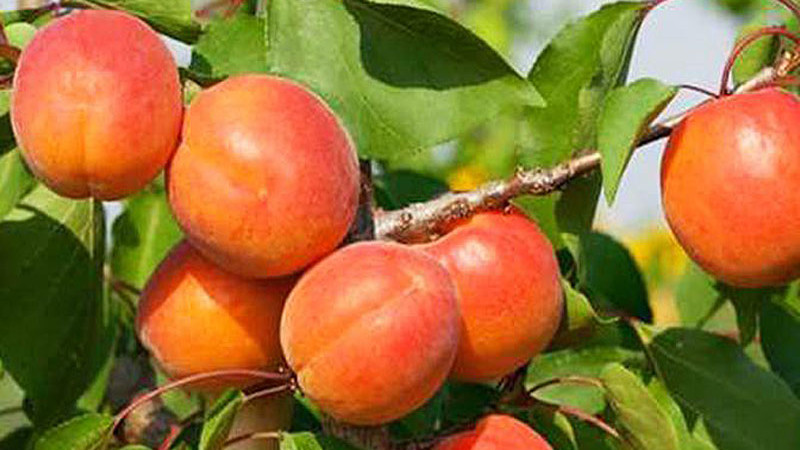
While 'Lāsma' is a safe bet, 'Velta' is the reward in good years. It produces extremely large fruits (commonly 45 g, up to 50 g), which is a rarity in the category of Nordic apricots. The fruits are orange, aromatic, and very tasty. Since it is cross-pollinated and has medium disease resistance (requires spring spraying), we recommend it for more advanced gardeners. Harvest takes place in the first half of August. Tip: It is an excellent pollinator for the 'Daiga' variety.
3. 'Daiga': The Juicy Beauty
Like 'Velta', 'Daiga' also requires a partner for pollination (ideally 'Velta' itself). It will reward you with a rich harvest of oval, orange fruits with a red blush. The flesh is very firm and aromatic, with a balanced sweet-sour taste. The tree grows upright and shows very good resistance to shot-hole disease (Clasterosporium). Because it has thin skin and a softer consistency when fully ripe, it is best for direct dessert consumption.
4. 'Dzintars': The Secret Unregistered Trump Card
Although not officially registered, 'Dzintars' is highly valued among growers. It combines regular fertility with very beautiful and sweet orange-colored fruits. It has medium disease resistance and is the perfect "golden mean" for reliable summer harvests.
5. 'Krasnoshchokiy' (Red-Cheeked): A Historical Legend from Ukraine
Moving to another latitude, we come to the Ukrainian variety 'Krasnoshchokiy' (Nikita Botanical Garden, 1947). It is one of the most widespread proven varieties in the East.
Self-Fertile "Fruit Factory"
This tree is incredibly productive. A mature specimen yields up to 90 kg of fruit annually. It is self-fertile, so it doesn't need a partner. It tolerates frosts down to -30 °C and handles drought excellently.
The fruits are medium to large (40–60 g), velvety pubescent with a beautiful red blush. The flesh is light orange with a typical apricot aroma and a sweet kernel inside the pit. It ripens early, already in mid-July.
What to watch out for: The 'Krasnoshchokiy' variety is more susceptible to monilinia (requires protection). The fruits drop very quickly from the tree after ripening and tolerate transport poorly, so we recommend it for home gardens for immediate consumption or processing (jams, drying).
Variety Comparison for Choosing in Your Garden
| Variety | Origin | Pollination | Ripening Time | Main Advantage |
|---|---|---|---|---|
| Lāsma | Latvia | Partially self-fertile | Early August | Long bud dormancy (escapes frosts) |
| Velta | Latvia | Cross-pollinated | Early August | Extra large fruits (up to 50 g) |
| Daiga | Latvia | Cross-pollinated | Turn of July/August | Firm flesh, excellent taste |
| Dzintars | Latvia | - | Mid-August | Reliable and sweet variety |
| Krasnoshchokiy | Ukraine | Self-fertile | Mid-July | Record harvest (up to 90 kg), sweet kernel |
Conclusion
Forget the disappointment of a frozen crop. If you live in a colder area, Latvian varieties ('Lāsma', 'Velta', 'Daiga', 'Dzintars') will provide you with frost-hardy genetics designed to survive Nordic winters. If you have space and crave homemade apricot brandy or a massive amount of jams, the Ukrainian 'Krasnoshchokiy' will shower you with a harvest. Choose wisely and look forward to regular summer sweetness.
Prepare for new planting today
Check out our offer of frost-hardy apricots ➤
Worried about spring frosts?
Join our community and consult with experienced growers.
Join our VIP Facebook group HERE ➤
Related Products


