





















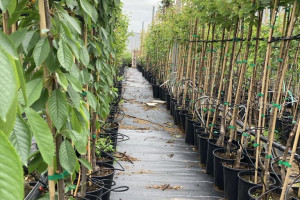
Black Apricot – Disease-Resistant and Sucrose-Free
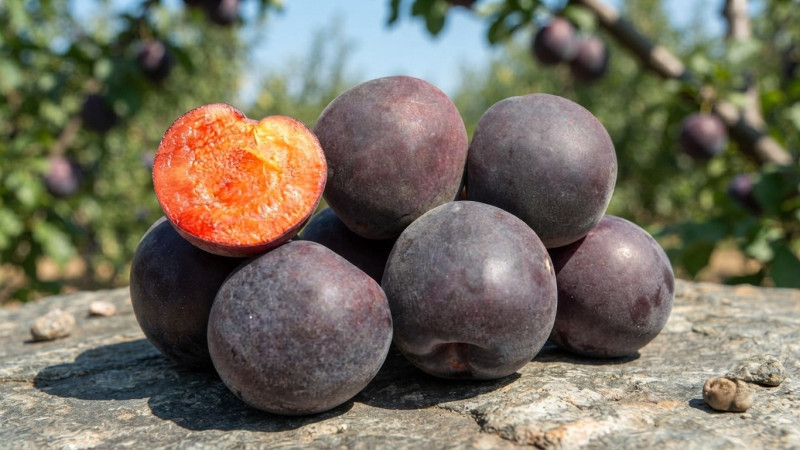
The Black Apricot: A Natural Shield and a Sweet Secret
Why this ancient hybrid is the dream of organic growers and healthy-eating fans alike
Growing stone fruit today comes with two big challenges: fighting fungal disease, which often means reaching for chemistry, and finding fruit that is sweet yet still healthy and low in calories. What if one cultivar solved both at once?
In the shadow of modern, refined cultivars lies an ancient botanical treasure: the black apricot (Prunus × dasycarpa). This spontaneous natural hybrid carries a wild resistance to disease and, at the same time, a surprisingly healthy fruit composition with not a trace of sucrose. Let's explore why the black apricot is nature's double gift for modern, organic, health-conscious orchards.
The everyday reality in the orchard: Without regular fungicide sprays against brown rot and shot hole disease, classic apricot cultivars struggle to produce a healthy crop, especially in wetter seasons.
The wild blood of the myrobalan: the root of two exceptional traits
To understand what makes the black apricot so exceptional, we need to look at its genetic origin. Prunus × dasycarpa is not the product of laboratory breeding but a spontaneous natural hybrid between the common apricot (Prunus armeniaca) and the myrobalan, also known as the cherry plum (Prunus cerasifera) (Kostina, 1936; Akopian et al., 2024).
The genetic key: The myrobalan, the black apricot's second parent, is the key to its unique traits. It is known for its toughness, its ability to survive in harsh conditions without human care, and a naturally low sucrose content in its fruit. Research confirms that the black apricot inherited from it both a high tolerance to biotic and abiotic stress factors and a distinctive sugar profile with a higher ratio of glucose to fructose (Eremin et al., 2021; Akopian et al., 2024).
This shared genetic foundation gives the black apricot two major strengths at once: exceptional disease resistance and a surprisingly healthy, sucrose-free fruit composition. Let's look first at its phytosanitary profile, then at what happens inside the flesh of its ripe fruit.
Triumph over fungal infections: brown rot and shot hole disease stand no chance
The biggest nightmare for stone fruit growers is fungal disease. Classic apricots (P. armeniaca) are highly susceptible to it, which often leads to massive crop losses and entire branches dying back. The black apricot, however, shows remarkable resistance in this respect.
A detailed study of the traditional Armenian cultivar 'Shlor-Tsiran' (roughly translated as "plum-apricot") produced encouraging findings. This old landrace is known not only for its high frost hardiness but, above all, for its excellent disease resistance.
Compared with common apricots, the 'Shlor-Tsiran' cultivar is far less frequently affected by brown rot or shot hole disease.
— based on Akopian et al., 2024
Quick overview: who resists disease
|
|
Classic apricot (P. armeniaca) – high susceptibility to both brown rot and shot hole disease |
|
|
'Shlor-Tsiran' cultivar – rarely affected by either brown rot or shot hole disease |
|
|
European plum × black apricot hybrids – full resistance to shot hole disease, with no brown rot infection at all |
This natural tolerance makes the black apricot an exceptionally promising crop for the future, particularly in organic farming, where the use of synthetic fungicides is strictly limited or banned outright (Akopian et al., 2024).
A breeding marvel: passing resistance on to new hybrids
Breeders around the world took notice of the black apricot's outstanding health and set out to use its genes to strengthen other, more susceptible fruit species. Soldatov and Salaš (2007) carried out research in this direction by crossing the black apricot with the hexaploid European plum (Prunus domestica). Their goal was to combine high productivity and fruit quality with disease resistance, and the results were remarkable.
Source: Soldatov & Salaš, 2007
These results show that the black apricot is an outstanding donor of resistance genes for breeding entirely new, ecologically stable fruit cultivars.
Protection from the roots: fighting invisible pests in the soil
The black apricot's resistance does not stop at leaves and fruit; it reaches deep underground. In modern fruit growing, soil fatigue and infestation by plant-parasitic nematodes are major problems, damaging tree root systems and spreading viral diseases. Conventional farming often addresses this with drastic and environmentally damaging chemical soil fumigation.
A solution from Krymsk: At the Krymsk research station in Russia, black apricot genes were used to breed a special clonal rootstock called Alab 1. Created through a complex cross of (Japanese-American plum × myrobalan) × black apricot, it offers not only good compatibility with other stone fruit species but, above all, high resistance to the dangerous ring nematode Mesocriconema xenoplax (Eremin et al., 2021).
Using resistant rootstocks based on the black apricot allows growers to establish healthy orchards even on infested soils, without needing chemical treatment.
Overview of documented resistance
| Threat | Resistant material | Source |
| Brown rot (fruit rot, blossom blight) | 'Shlor-Tsiran' cultivar | Akopian et al., 2024 |
| Shot hole disease (Clasterosporium) | 'Shlor-Tsiran'; European plum × black apricot hybrids | Akopian et al., 2024; Soldatov & Salaš, 2007 |
| Monilia fructigena | European plum × black apricot hybrids | Soldatov & Salaš, 2007 |
| Scale insect (Sphaerolecanium prunastri) | European plum × black apricot hybrids | Soldatov & Salaš, 2007 |
| Ring nematode (Mesocriconema xenoplax) | Alab 1 rootstock | Eremin et al., 2021 |
← Swipe the table sideways →
A sweet secret without sucrose
Disease resistance is only half the black apricot's story. The other half plays out inside the flesh of its fruit. Scientists recently carried out a detailed phytochemical analysis of the traditional Armenian cultivar 'Shlor-Tsiran' using high-performance liquid chromatography (Akopian et al., 2024), and the results were remarkably surprising.
The key finding: The biggest surprise of the analysis was the complete absence of sucrose (ordinary table sugar) in the flesh of ripe fruit. While common commercial apricot cultivars (Prunus armeniaca) accumulate substantial amounts of sucrose as they ripen, the black apricot takes an entirely different path – its sweetness comes exclusively from simple sugars (monosaccharides).
|
3.368%
Glucose in the flesh (w/v)
|
1.935%
Fructose in the flesh (w/v)
|
0.0182%
Vitamin C (w/v)
|
4.615 mg/g
Antioxidant activity*
|
← Swipe the table sideways → | *quercetin equivalent; data from Akopian et al., 2024 ('Shlor-Tsiran' cultivar)
The absence of sucrose in the fruit of the 'Shlor-Tsiran' cultivar is a direct biochemical reflection of its hybrid nature – an inheritance from the myrobalan's naturally low sucrose content.
— based on Akopian et al., 2024
| Glucose | 3.368% |
| Fructose | 1.935% |
| Sucrose | 0% – not detected |
← Swipe sideways → | This scale is illustrative, set against a 0–5% range typical of simple sugar content in stone fruit flesh; see exact figures above.
Acids and antioxidants: a refreshing balance
Sugar is only half the flavor story. The other, refreshing half comes from organic acids. Here too, the black apricot's profile is distinctive and subtle – analysis of the 'Shlor-Tsiran' cultivar detected several acids in trace but sensorially meaningful amounts.
| Acid | Content (mg/ml) |
| Citric | 0.011 |
| Malic | 0.01 |
| Succinic | 0.005 |
| Tartaric | 0.001 |
| Oxalic | not detected |
← Swipe the table sideways → | Source: Akopian et al., 2024
Good news for sensitive digestion: No oxalic acid was detected in the fruit at all. This is particularly good news for people with sensitive digestion or a tendency toward kidney stones (Akopian et al., 2024).
In addition, the fruit contains vitamin C (0.0182% w/v) and shows antioxidant activity (4.615 mg/g in quercetin equivalent). Although the black apricot has an overall lower to moderate antioxidant potential and relatively lower sugar and acid content compared with some modern, highly commercial apricot cultivars, its composition is exceptionally valuable from a dietary standpoint (Akopian et al., 2024).
The ideal snack for a modern diet
What do these laboratory figures mean for the average consumer? First and foremost, that the black apricot is an excellent, low-calorie, refreshing alternative to modern, often overly sweet fruit cultivars.
A note on shelf life: Lower sugar and organic acid content, which normally act as natural preservatives, combined with higher water and mineral content, means black apricot fruit has a shorter shelf life. It spoils faster and is not suited to long-term storage or transport over long distances (Akopian et al., 2024).
This is one reason the black apricot never became a global supermarket hit and remained more of a local specialty – a fruit meant for immediate seasonal enjoyment at local markets or for quick processing. As other studies confirm, when processed into jams or other preserves, the black apricot retains exceptionally high quality and is prized as a premium ingredient (Eremin et al., 2021).
Conclusion
At a time when consumers increasingly demand clean, chemical-free fruit while also watching what they eat, the black apricot (Prunus × dasycarpa) turns out to be a rare match for both needs. This ancient hybrid, carrying the wild blood of the myrobalan, is living proof that nature worked out both a defense against disease and a recipe for balanced, healthy fruit a long time ago.
Whether you choose to grow old landraces like 'Shlor-Tsiran' for their fruit, or tap into the black apricot's genetic potential to breed new, resilient hybrids and rootstocks, one thing is certain: the black apricot is an invaluable ally on the path to sustainable, healthy, and refreshingly different fruit growing.
|
Discover the black apricot in our shop Choose a tree with natural disease resistance that rewards you with sweet, sucrose-free fruit. Visit the shop |
Join us on Facebook Swap growing experience, ask about varieties, and share your harvest in our Facebook community of passionate fruit growers, chat with experts, and be first to see new articles. Visit the page |