
Cart

Blackberry (Rubus fruticosus) LOCH NESS
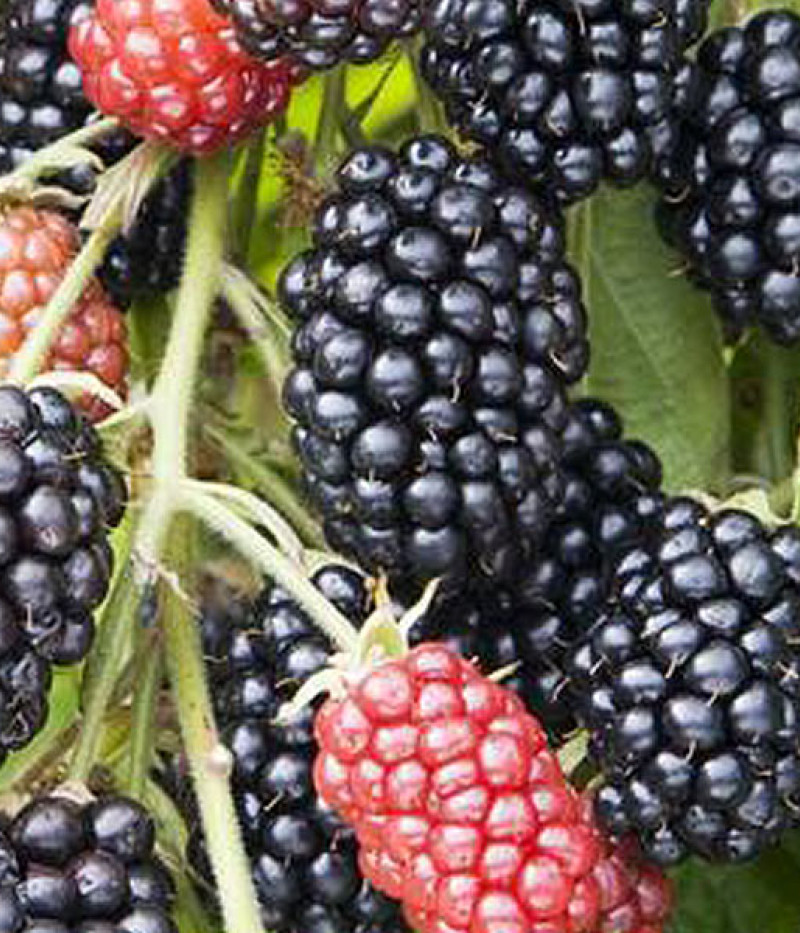
Blackberry (Rubus fruticosus) LOCH NESS - Tutifruti, s.r.o.
New
Blackberry (Rubus fruticosus) LOCH NESS
Specifications
Height at sale50 cm
PotC1,5
The standard delivery time for Austria is 2-5 working days.
We send goods on Monday, Tuesday, Wednesday, by agreement also Thursday or Friday.
Price
19,00€
  • Stock: In Stock
  • Model: Rubus fruticosus

Blackberry (Rubus fruticosus) 'Loch Ness'

A classic, highly popular Scottish variety, prized for its large fruits, high yields, and complete thornlessness.

The 'Loch Ness' variety is an absolute global staple among blackberries. It is the ideal choice for both home gardeners and commercial growers looking for a proven, vigorously growing cultivar. It offers hassle-free cultivation without nasty thorns, very good frost resistance, and abundant crops of attractive fruits that boast excellent storability.

Main advantages of the variety:

  • 100% thornless: Smooth canes make bush maintenance and harvesting incredibly easy.
  • Large and firm fruits: Attractive black berries with excellent post-harvest shelf life.
  • Early ripening: Ripens quite early for its type and provides a long harvest window.
  • High yield: A highly reliable variety with an abundant crop (approx. 4.5 kg per plant).
  • Vigorous growth and good frost resistance.

Origin and Registration

  • Origin: Scotland (Scottish Crop Research Institute - SCRI, Dundee). Breeder: Derek L. Jennings.
  • Crossing and Registration: Created in 1978 by crossing two SCRI selections with a complex pedigree (including 'Chehalem', 'Early Harvest', and 'Comanche'). Patented in the USA in 1989.

Variety Characteristics

Shrub
  • Vigor and Habit: Strong and vigorous growth. The canes initially grow upright but tend to become semi-upright later on (especially in younger plants).
  • Canes: Thick, angular (typically pentagonal), and completely thornless. In autumn, they turn an attractive deep purple color.
  • Growth Specifics: The bush does not produce spreading root suckers. Instead, 5 to 9 new replacement canes emerge each year directly from buds on the root crown.
  • Flowers and Laterals: White, medium-sized flowers. The fruiting laterals are flexible, about 30 cm long, ensuring the fruits are highly visible and accessible.
Fruit
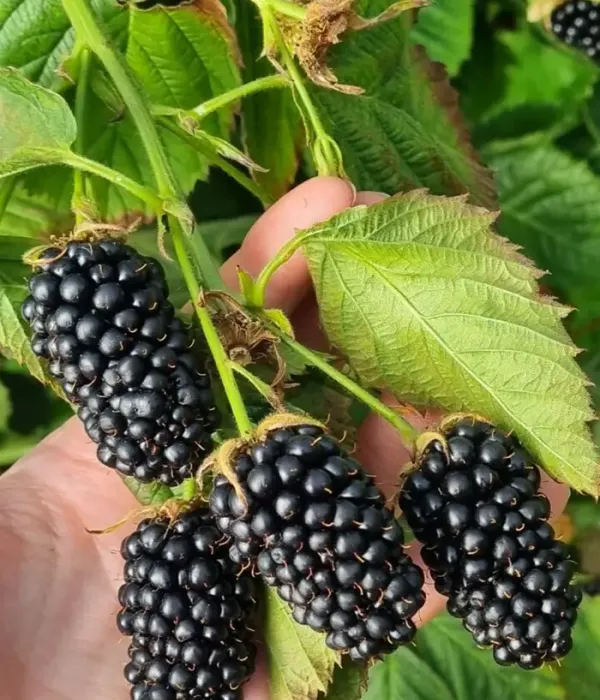
  • Size and Shape: Large, blunt-conical fruits. The length ranges from 25 to 40 mm, with an average weight of around 6 g (though they can reach up to 10 g).
  • Color and Skin: When fully ripe, they are deep black, slightly glossy, with minimal fuzz.
  • Firmness and Shelf Life: The berries are very firm and feature excellent fresh storability. Freezing tip: If the fruits are frozen before reaching full ripeness, they may have a slight tendency to revert to a red color.
  • Taste: A traditional, typical blackberry flavor with a pleasantly refreshing tart-sweet balance.
Resistance and Requirements
  • Frost: The variety has stood the test of time and is rated as fully frost-hardy and reliable for temperate climates.
  • Diseases and Pests: Exhibits average susceptibility to common blackberry diseases. No excessive sensitivity to specific pathogens has been observed.
Cultivation Recommendations
  • Planting and Trellising: Since the canes transition to a semi-upright habit over time, growing them on a wire trellis is recommended for comfortable harvesting and good air circulation.
Harvest and Yield
  • Harvest Time: Ripens relatively early for this type of blackberry. A massive advantage is that the crop does not ripen all at once; it extends over a long harvesting period (several weeks).
  • Yield: Very high. At standard spacing (approx. 0.9 m x 2.7 m), a well-established plant typically yields about 4.5 kg of fruit.

Write a review

Note: HTML is not translated!
Rating
Bad Good